Import, map, inspect
Read measurements, define the plate, and surface quality warnings before calculations continue.
An offline analysis environment designed around real drug-response workflows: plate layout, quality control, normalization, curve fitting, comparison, statistics, and export.
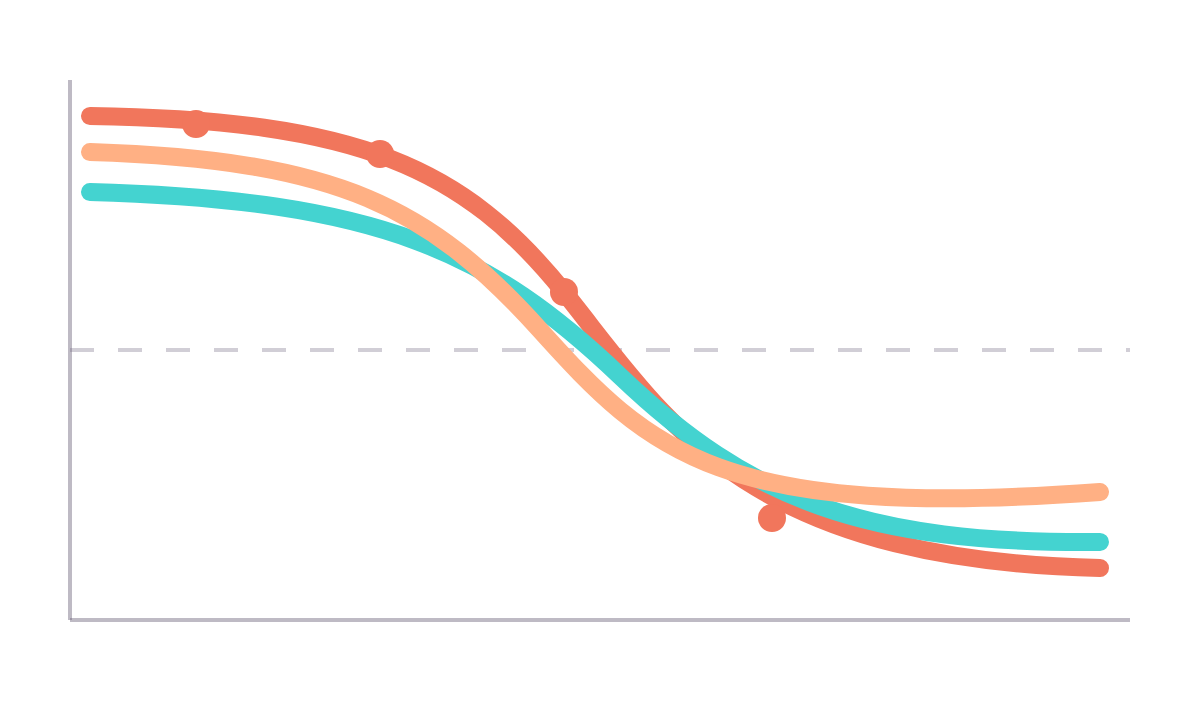
PF155 · PF760 · PF998
The problem
A dose-response workflow contains many small decisions: plate structure, controls, missing values, normalization, fit quality, excluded points, and the meaning of an IC50 estimate.
MesoLab aims to make those decisions visible and repeatable without requiring every laboratory user to write analysis code or manually reconstruct the same workbook.
Seven-step workflow
The interface keeps each decision in context and makes the next step obvious.
Read measurements, define the plate, and surface quality warnings before calculations continue.
Apply control logic, estimate 4PL curves, and compare cell lines or treatment conditions.
Create understandable outputs that preserve assumptions, warnings, and decisions.
Research origin
The project grows from practical experience with Nintedanib, autophagy inhibitors, 2D and 3D models, viability assays, Western blots, and flow cytometry.
That context influences the interface: controls matter, inconsistent cell-line behavior needs to remain visible, and a curve is not automatically trustworthy because software produced it.
Current roadmap
Development is focused on the core analysis path before expanding into every possible laboratory method.
Import, plate layout, QC, normalization, 4PL fitting, comparison, statistics, and export.
Measurement import, setup, densitometry context, normalization, and reporting.
Bring multiple experimental views together without obscuring their limitations.
Contact
Reach out about biotechnology, laboratory tools, local-first AI, research software, or a useful collaboration.


